
Common Questions


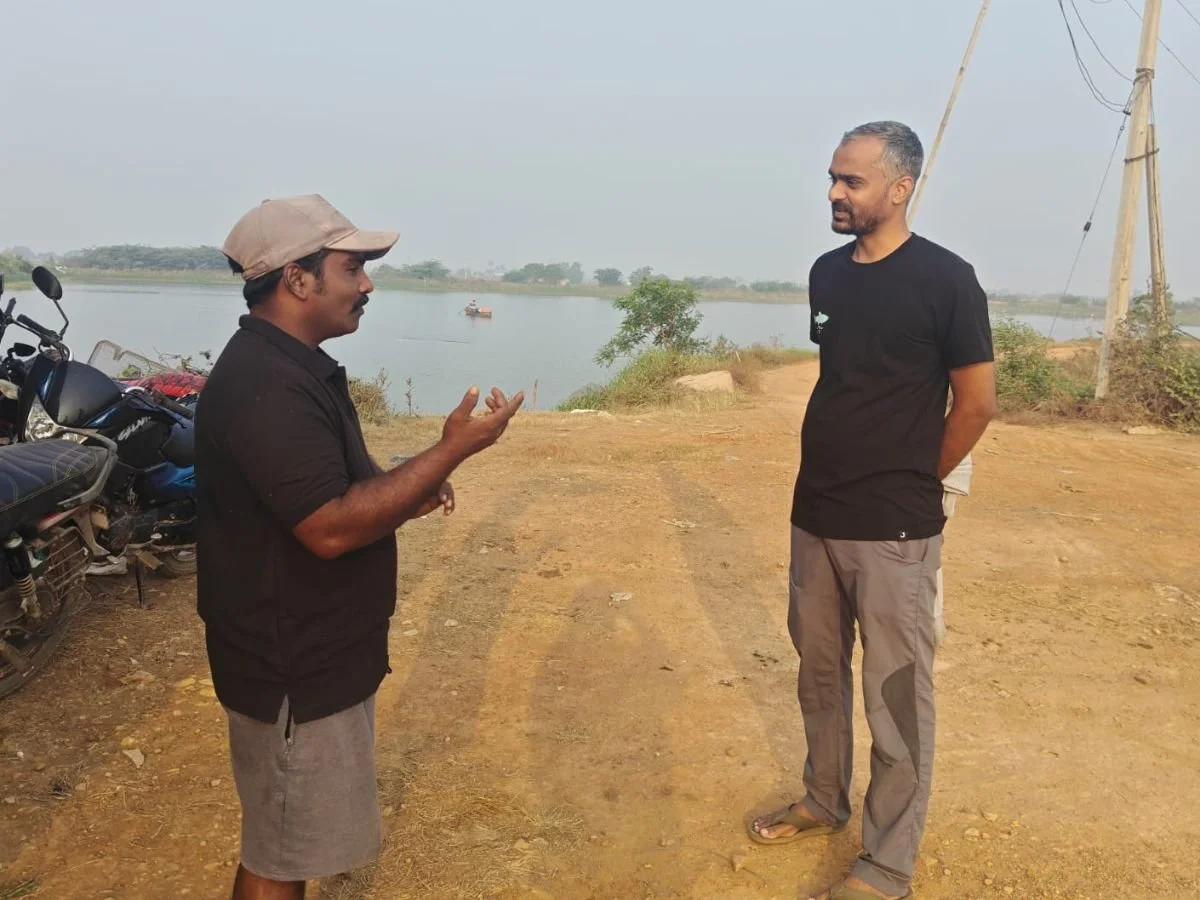
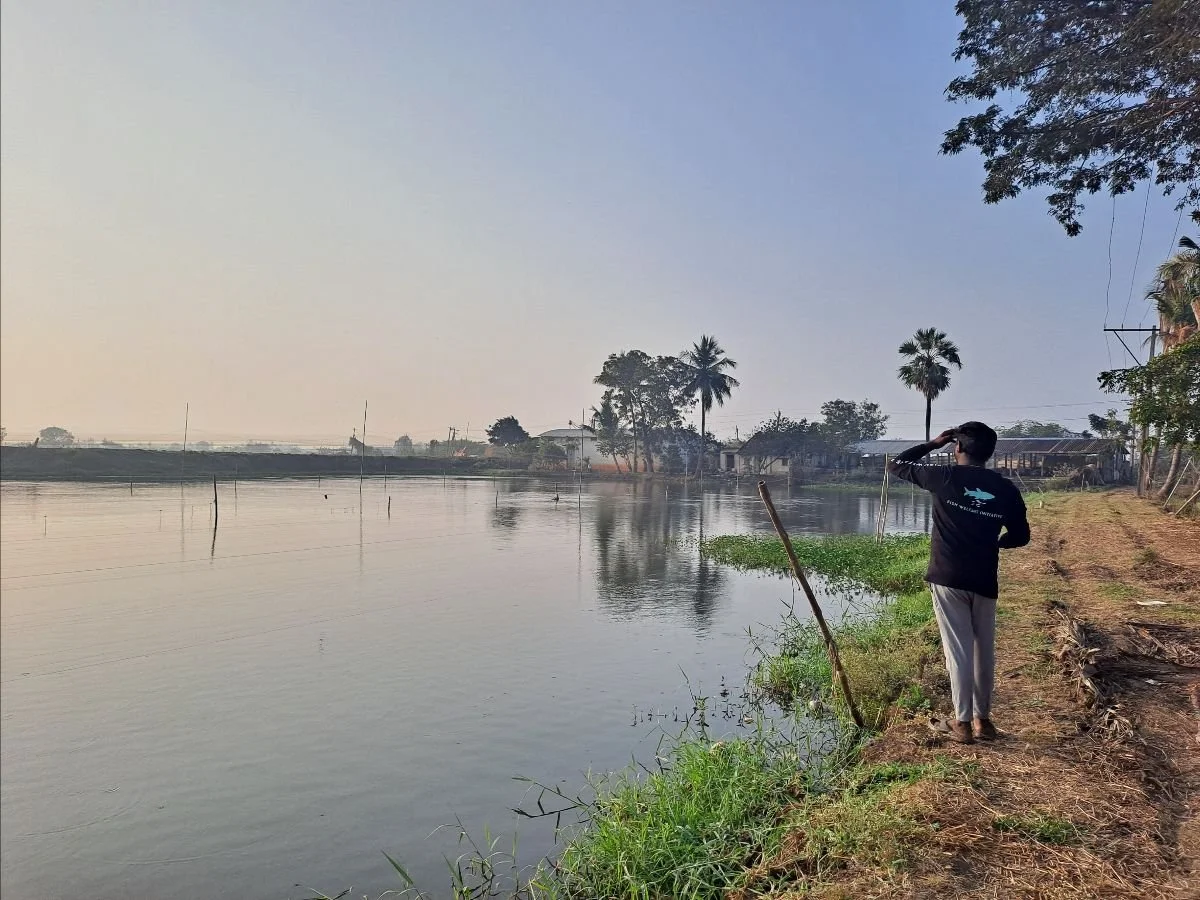
Dawn, at a partner farm of Fish Welfare Initiative (incubated 2019)
Is the program for me?
How do I know if I’d be a good fit?
There are a few ways to learn more about this:
- Apply: We’ve designed our application process to help both you and us figure out if you’re a good fit, so the best way to know is to apply! The first step takes 15–30 minutes.
- Attend a webinar: During the several periods each year when we’re open for applications we host Q&A webinars where we share more and answer questions about the program. Follow us on Luma to be notified about upcoming webinars.
- Introspect: We look for ambitious, open-minded, high-agency individuals who are passionate about improving the world and are good decision-makers. Many of our best founders doubted that they had enough of these qualities. The question to ask yourself isn’t “Do I already have what it takes?” but “Am I willing to find out?”
- Take the quiz: We have a short quiz to help you assess your fit for founding a charity. Try it here!
Can I join from anywhere in the world?
Yes. People from any country can apply, and the program runs mostly online. We cover travel and accommodation for the in-person weeks in London, and we help successful candidates work through visa options. Being from or living in the Global South is often an advantage: many of the charities we incubate work in those regions, and knowing the context firsthand is very valuable.
Can I do the program with kids or other caring responsibilities?
Yes. The program is demanding, but we’ve had participants who were new parents or had significant family commitments, and they made it work. (We’ve even had several mid-program weddings!). Once you’re deep into the application process, we can connect you with alumni who participated with kids so you can hear directly what it was like. Where caring responsibilities mean higher financial needs, we can adjust stipends accordingly.
What education and experience do I need?
There’s no required degree or work experience. Credentials matter less in entrepreneurship than demonstrated skill and initiative, so a self-directed project you actually finished tells us more than a qualification. You don’t need non-profit experience, and you don’t need to have founded anything before; that’s what the program is for, and many of the field’s leading charities were started by people with little prior experience in their area. Our founders have ranged from seasoned entrepreneurs to 19-year-old college dropouts. Learn more about the backgrounds that have turned out to be superpowers here.
Do I have to quit my job to participate in the program?
For the two months of the program, it needs your full attention: five days a week, eight hours a day. We pay a stipend that covers your living costs so this is financially possible (see the money section below). A small number of participants have combined the program with ongoing work commitments. If that’s your situation, tell us up front and we’ll try to find a solution that works. Similarly, you should expect that leading a charity startup is a full time job.
Am I too old / too young?
We’ve had charity founders from 19 to their 50s, and we don’t think that’s the limit of who could be a good fit.
Do I need to be fluent in English?
The program runs in English, so you’ll need to work at a professional level by the time it starts. You don’t need to be there yet to apply: we’ve admitted people with conversational English who upskilled to the required level in the months before the program began.
Is founding a long-term commitment?
It doesn’t have to be. Taking an organisation from zero to one takes a different kind of leader than growing it from one to a hundred, and it’s not uncommon for a founder to hand over after a couple of years to start something new or move into a more predictable role.
Do I need to be part of the effective altruism community?
No. AIM grew out of the effective altruism community and we share its focus on evidence and cost-effectiveness, but you don’t need any connection to it and you’re welcome to have differences of opinion (we certainly do!). Many of our strongest founders had never engaged with effective altruism before they applied.
What are my chances of getting in?
It’s true that we get a high volume of applications, so the headline acceptance rate looks low. But that rate averages across everyone, including many people who apply without much background on what we do. If you’re applying intentionally, after reading about the program and thinking about your fit, your real odds are considerably better than the headline number suggests.
And you’re probably a worse judge of your own fit than you think: half of our strongest founders initially believed they weren’t good candidates. The first application step takes 15–30 minutes and each later stage is designed to be worth your time in itself, so the cost of finding out is low.
Can I reapply to the program?
Yes. A number of founders were only accepted on their 2nd or 3rd attempt. We ask you to wait a full year (skipping one round) and use the time to improve your fit: taking on leadership, building skills through impact-driven work, gaining relevant professional experience, or further education.
I have run or founded an NGO before. Is this still for me?
Yes, and we’re especially excited to hear from you. Experienced founders still get a lot from the program: a matched co-founder, the support of our research team, a seed grant, hiring support, expert mentors, and a community of founder peers who are here to support you on your journey. If we genuinely think we have nothing to offer you, we’ll tell you. Don’t rule yourself out before we’ve had that conversation: get in touch first.
I have already launched my charity. Is this still for me?
We’re not currently accepting applications from people who already run a charity. Our program is designed to help you launch one of our recommended charity ideas.
We believe existing organizations need tailor-made support we’re not currently positioned to give at scale.
That said, we think there are unique cases where we’d make an exception, for example if your organization has a high expected impact and you need a co-founder or specific strategic support. If that sounds like you, email us at candidates@ambitiousimpact.com with:
- A one-sentence description of your organization and what it does.
- A brief estimate of its impact (scale and cost-effectiveness, substantiated).
- A short explanation of why you’re interested in the program for your organization at this stage.
We’ll review these on a case-by-case basis.
How does the program work?
When do the next programs start?
You can see the info about our upcoming programs here.
What does the application process look like?
It starts with a short form that takes 15–30 minutes. Later stages go deeper and are designed to be useful in themselves: applicants often tell us the process sharpened their thinking about how to have impact in their careers, whether or not they got in. More information here.
Where does the program take place?
Mostly online, with two weeks in person at our London office, where you’ll work alongside your cohort and meet our community of founders. We cover your travel costs, and you’re welcome to stay longer and keep working from the office. Some rounds include additional optional in-person time; see the details for upcoming programs here.
Will I need a visa?
People from most countries can come to the UK for the in-person weeks on a short-stay visitor visa. If this doesn’t apply to you or you’re not sure, there’s no need to worry: if you’re accepted, we’ll help you think through your options and support you with the process.
Is the program full-time?
Yes: for the two months of the program, you’ll be working on it full-time. If you’re wondering how that fits with an existing job, see “Do I have to quit my job to participate in the program?” in the “Is the program for me?” section above.
Will you match me with a co-founder?
Yes, and it’s one of the most valuable things we do. The first half of the program is partly about testing your fit with your cohort, a group already selected for talent and commitment. We guide the matchmaking process closely and it has a strong success rate.
Choosing who you co-found with is a big decision. We facilitate the matchmaking process, but in the end, the decision is always yours to make. Two co-founders is the standard, but founding teams of one or three happen too. If you’re applying with a co-founder already in mind, that’s fine: disclose it up front, and know that you’ll each need to get in on your own merits.
Does the program cost anything?
No. There are no fees, we cover travel for the in-person weeks, and we pay you a stipend to cover your living costs during the program. If that sounds too good to be true, see “Is this a scam?” in the “Money, funding, and what’s the catch” section below for how it’s possible.
What will my charity do?
Do I need my own charity idea to apply?
No. Our research team does the work of identifying and recommending a set of charity ideas backed by strong evidence (sometimes it’s a fully-scoped solution, other times it’s a promising problem area to mine for new solutions). During the program, you explore which of our recommendations you’re best placed to found.
I have my own idea for a charity, can I get into the program?
Yes, though it’s rare. We assess your idea on the strength of its reasoning and evidence, the same bar our own recommendations have to clear. If it doesn’t meet that bar, we may still offer you a place working on one of our recommended ideas. Whatever happens, disclose your idea up front: hiding that you intend to found your own idea will count against you.
Do I need to choose one of your recommended ideas before the program?
No. You choose during the program, once you understand the ideas properly and have a clearer view of your own comparative advantage. Your co-founder match often shapes the final choice too.
Does it have to be a non-profit?
No. What matters is impact, not legal structure. We’ll gladly help launch a for-profit so long as having a massive positive impact is its primary function, and the best for-profits can be competitive with the best non-profits on that measure.
Money, funding, and what’s the catch
Is this a scam? Why do you run this program for free?
We get this question a lot. It does sound too good to be true: a free program that pays you to attend and then helps fund the charity you start. It was our now-CEO’s first reaction too. Here’s the situation: We believe starting new, evidence-based charities is one of the most powerful ways to improve the world. Our funders agree. We exist to remove blockers to founders getting these charities started, which is why we (with the help of our funders) provide the training free of charge, provide participants with stipends to cover their living costs, and coordinate a network of independent seed funders to provide your charity with its first year’s operating budget.
How will I meet my financial needs during the program?
Firstly, the program is entirely free. All necessary materials are provided. We cover your transport and accommodation costs for in-person components.
Meanwhile, we cover your living expenses with stipends so you can focus fully on the program. Historically most candidates have taken $2000-5000/month, based on their individual needs and cost of living. If your financial needs are higher, for example because you have dependents or live in an expensive city, we encourage you to request more, and we’re committed to accommodating reasonable requests: money shouldn’t be the reason great talent doesn’t found a charity. If concern that you might not be able to cover your costs during the program is making you hesitant to apply, get in touch with Emma. We feel strongly that finances shouldn’t stop top founders from starting a charity.
It’s equally important to us that we use funding responsibly to help beneficiaries as much as possible. To this end, we encourage those with lower financial needs (e.g. no dependents, low cost-of-living location) to request lower stipends so that the leftover money can go towards helping beneficiaries.
Note that this is separate from your salary once you found: you set that yourself, paid from your organization’s budget. And if you don’t end up starting a charity, we provide a further three months of stipend plus career support as a safety net.
Who funds the incubated charities?
At the end of the program, you submit a funding proposal to our seed network: more than 50 independent donors who back the new projects they’re most excited by. Seed funding typically covers your first year of operations or more. After that, your charity fundraises for itself, usually from grantmaking foundations and individual donors. We train you in fundraising during the program and provide ongoing advice afterwards. The good news is that charities who demonstrate cost-effective impact generally have an easy time raising money.
What if my funding proposal doesn’t get accepted?
It’s unlikely: around 95% of the proposals we recommend for submission to our seed network get funded. If yours isn’t among them, you can seek funding from donors outside the network. And if you decide not to pursue the charity, we provide a three-month transitional stipend and career guidance while you find your next role. Our alumni are in high demand (after all, they’re selected for being very talented and have been given world-class training) and so many go on to senior roles in our ecosystem of charities or at AIM itself. We have a near-100% track record of connecting participants with impactful opportunities.
How much will I earn as a founder?
You set your own salary, paid from your organization’s budget. We encourage founders to base it on their individual needs and circumstances, balancing the responsibility to use philanthropic funding well against paying yourself enough to thrive in a demanding job. In practice this means salaries vary widely: some founders are young with no dependents and cheap housing, others support families, live in expensive cities and need to save for retirement. Both are fine.
Who funds AIM?
Philanthropic foundations and individual donors who want more field-leading charities to exist. Our funders have included Founders Pledge, Coefficient Giving, and GiveWell.
What’s in it for AIM?
Impact. We believe starting new, evidence-based charities is one of the most powerful ways to improve the world. Helping founders do it is how we have an impact.
There are no strings attached, and we take nothing from your organization (see the next question).
Does AIM take equity or control of my charity?
No. We take no equity, board seats, or IP. Your charity is an independent organization.
Who is AIM?
Are you a charity or for-profit?
A non-profit. We’ve been a registered charity in England and Wales since 2021 under our legal name, Charity Entrepreneurship (charity number 1195850). You can find our legal registration details, annual reports and audited accounts here.
Before that we operated as a project of Charity Science Foundation of Canada, a Canadian registered charity; you can review its annual information returns, including detailed financials, here.
What’s AIM’s track record?
Since 2019, we’ve launched 70+ charities which have reached over 53 million people and 10 billion animals. They have raised >$100 million and deployed it efficiently, with our strongest performers having been independently assessed as 20-30x more cost-effective than direct cash transfers (the gold-standard in global aid). Learn more about our track record here.
What does it mean for an organization to be “AIM incubated”?
Two things: we provided formal support to launch it* (through our incubation program or otherwise) and at the end of that process we endorsed the organization.
The endorsement is about whether the founders are pursuing a charity idea, strategy or plan that meets our high standards for expected impact. The vast majority of organizations we support end up getting endorsed, because they’re typically built by founders we’ve hand-picked, based on charity ideas our research team has pre-vetted, and pursuing plans made with the mentorship of our program managers. If we don’t endorse an organization, they’re welcome to continue with their plan, but without access to our seed network and “AIM incubated” designation.
We’re strict about this because our endorsement carries weight with many funders and partners. It works a bit like a trademark: people know AIM’s values and way of thinking about impact, and “AIM incubated” needs to mean an organization strongly shares them.
Note that while our process for giving organizations the “AIM incubated” designation has always looked roughly like this, it wasn’t formalized until 2026.
*Sometimes we “incubate” existing early stage organizations who are seeking mentorship and support to take their impact to the next level. This policy applies to them as well.
What happened to the other programs you used to run?
We’ve piloted several programs over the years: training charity researchers, training grantmakers and philanthropic foundations (our “Impactful Grantmaking” program), and incubating for-profit startups (our “Founding to Give” program). We’re now focused entirely on our flagship Charity Entrepreneurship Incubation Program, which, despite the name, will gladly help launch for-profits whose operations have a large, direct positive impact.
If you’re interested in gaining charity research experience, you can express interest in a research fellowship at AIM here.
If you want to start a foundation or increase its impact, Elevate Philanthropy runs an improved version of our old Impactful Grantmaking program.
Still have a question?
We answer questions live at our Q&A webinars, which we run whenever applications are open. Follow us on Luma to be notified about the next one.
Get notified about the next webinarGet webinar updatesOr email candidates@ambitiousimpact.comemail us.